Cowboy Possum, Funny, Cowgirl, You Ve Ye
When I sit down to review a new digital asset for my embroidery studio, I am rarely looking at just a pretty picture. I am looking at production viability. I am asking myself: will this stitch cleanly? Will it hold up after twenty washes? And most importantly, does it have the personality to move units in a crowded marketplace? Today, I am putting Cowboy Possum, Funny, Cowgirl, You ve Ye under the microscope. This is not just a graphic; it is a potential cornerstone for a seasonal collection, a personalized gift line, or a quirky addition to a boutique brand.
The title alone sets a specific tone. It suggests humor, rural charm, and a touch of irreverence. As an experienced designer, my first impression of Cowboy Possum, Funny, Cowgirl, You ve Ye is one of immediate marketability. The concept of a possum dressed as a cowgirl is inherently whimsical. It bridges the gap between traditional Southern aesthetics and modern meme culture. For the craft business owner, this duality is gold. It appeals to the customer who loves country living but also appreciates a good laugh. However, the devil is always in the details when we translate a digital graphic into a physical embroidery project.
Visual Personality and Design Assessment
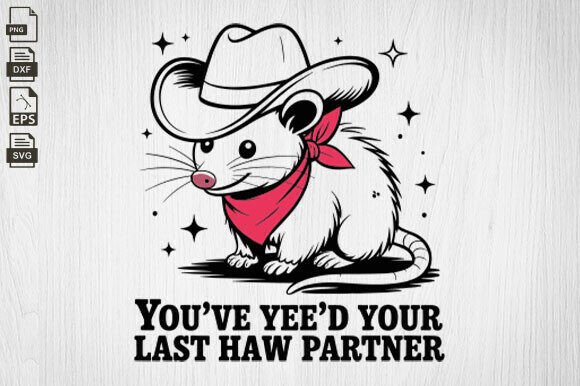
Before I even load the file into my machine, I analyze the visual weight and layout. A successful machine embroidery design needs clear focal points. Does Cowboy Possum, Funny, Cowgirl, You ve Ye offer that? Typically, designs with this kind of narrative text and character illustration require careful balancing. If the text "You ve Yee D Your Last Haw Partner" is too dense, it can become a stitching nightmare. If the possum character is too intricate, it may lose definition on smaller garments.
The mood created by this design is lighthearted and bold. It screams "statement piece." In terms of visual appeal, it works best when the contrast between the character and the typography is sharp. When evaluating the stitch density, I look for areas where fill stitches might pool or where satin stitches might pucker. A well-executed cowgirl hat or bandana detail on the possum adds texture without overwhelming the viewer. If the design relies heavily on tiny running stitches for fur texture, I would advise caution, as these can break easily on stretchy fabrics. But if the artist has used efficient fill stitches to represent the possum’s body, the result will be durable and vibrant.
Real-World Application: From Screen to Stitch
Let’s talk about real-life scenarios. I recently helped a client prepare a batch of custom embroidered tote bags for a local county fair. We needed something that stood out from the usual floral patterns. Cowboy Possum, Funny, Cowgirl, You ve Ye was an instant contender. Why? Because it tells a story. When a customer picks up a canvas tote with this design, they stop. They read it. They smile. That moment of engagement is what drives sales for any Etsy seller or small shop product.
I also envision this design thriving on heavyweight sweatshirts. The humor pairs perfectly with the cozy, rustic vibe of fleece or cotton blends. Imagine this stitched in bright yellows and deep browns on a black sweatshirt. The thread colors would pop, and the durability of the embroidery would withstand the wear and tear of daily use. Similarly, for baby embroidery, this could work beautifully on a onesie or a burp cloth, provided the design is scaled down appropriately. Parents love unique, funny gifts that aren’t generic. A personalized gift featuring this possum becomes a memorable keepsake.
Another strong use case is the embroidered patch. Many crafters sell patches as accessories for denim jackets, backpacks, and caps. Cowsky Possum, Funny, Cowgirl, You ve Ye fits the aesthetic of the current "westerncore" trend. It allows customers to customize their gear with a touch of humor. For commercial embroidery businesses, offering this as a standard option alongside classic logos can attract a younger demographic looking for novelty items.
Where Caution Is Required
Not every surface is created equal, and Cowboy Possum, Funny, Cowgirl, You ve Ye has limitations. I must advise against using this design on highly textured fabrics like heavy bouclé wool or loose-weave burlap. The needle penetration could be inconsistent, leading to skipped stitches or misaligned registration. Similarly, thin fabrics like silk or lightweight rayon require a high-quality water-soluble stabilizer to prevent puckering. Without proper support, the tension of the fill stitch might distort the fabric, ruining the clean lines of the possum’s silhouette.
Curved surfaces present another challenge. While caps are popular, the curvature can make flat designs look distorted if not digitized correctly. If you are placing this on a curved brim or a rounded hat crown, ensure the design has been compensated for curvature. Also, avoid using this on dark fabrics unless you are using a substantial amount of white or light-colored underlay. Dark backgrounds can sometimes swallow up mid-tone threads, reducing the visibility of the character’s features. Always test your stabilizer choice rigorously.
Impact on Product Value and Brand Trust
Using a unique design like Cowboy Possum, Funny, Cowgirl, You ve Ye elevates the perceived value of your handmade product. Customers are willing to pay more for items that feel personal and thoughtfully designed. When the stitching is clean and the colors are accurate, it signals professionalism. It builds trust. Conversely, a poorly executed version of this design—where the text is illegible or the possum looks blobby—can damage your reputation. This is why testing is non-negotiable.
For printable mockups and design assets, this image is versatile. It works well in social media ads because it grabs attention quickly. The humor encourages shares, which increases organic reach for your craft business. However, remember that a mockup is not the final product. Ensure that your actual finished product matches the quality of your digital previews. Consistency is key to maintaining a strong brand identity.
Practical Designer Notes for Execution
To get the best results from Cowboy Possum, Funny, Cowgirl, You ve Ye, follow these practical steps:
- Test on Scrap Fabric: Never run a full production job without testing on the exact fabric you plan to use. Check for color bleeding and fabric distortion.
- Review Stitch Density: Look closely at the digitizing. Are there large blocks of solid color? These should have adequate underlay to keep the fabric stable.
- Check Hoop Size: Ensure the design fits comfortably within your standard hoop sizes to avoid awkward trimming or re-hooping.
- Inspect Small Details: Zoom in on the digital file. Are the eyes distinct? Is the text readable at the intended size? Tiny details often get lost in embroidery.
- Black and White Mockups: View the design in grayscale to check contrast levels. If the design lacks contrast in black and white, it will likely struggle in color on certain backgrounds.
- Confirm Licensing: Before selling finished items, verify the commercial use rights. Some digital embroidery files have restrictions on how many units you can produce.
In conclusion, Cowboy Possum, Funny, Cowgirl, You ve Ye is a strong candidate for inclusion in your repertoire. It offers a blend of humor, cultural relevance, and visual interest that resonates with today’s buyers. Whether you are creating a sweatshirt embroidery line, a set of kitchen towels, or a collection of nursery decor, this design has the potential to stand out. Just remember that success lies in the execution. Respect the fabric, choose the right threads, and prioritize quality over speed. By doing so, you turn a simple digital download into a profitable, beloved handmade product that customers will cherish.